

Don’t Fall for It! Spotting and Avoiding Sweepstakes Scams.
Publishers Clearing House is a legitimate company famous for their multi-million-dollar giveaways, but that reputation is precisely why scammers love to impersonate them. They prey on excitement, trust, and the dream of life-changing prizes, all to trick people into handing over money or personal information.
How the Scam Works
Below is a letter that a member recently received in the mail. The letter informs the recipient that they have won $2.5 million dollars in a Publishers Clearing House giveaway. It includes a $9,950 check to cover insurance and attorney fees and goes on to explain that to obtain their prize money, the recipient must contact a “Claims Manager” before depositing the check. Seem fishy? Let’s break down the scam in more detail to spot the major signs this letter is fraudulent.
Click to Enlarge.
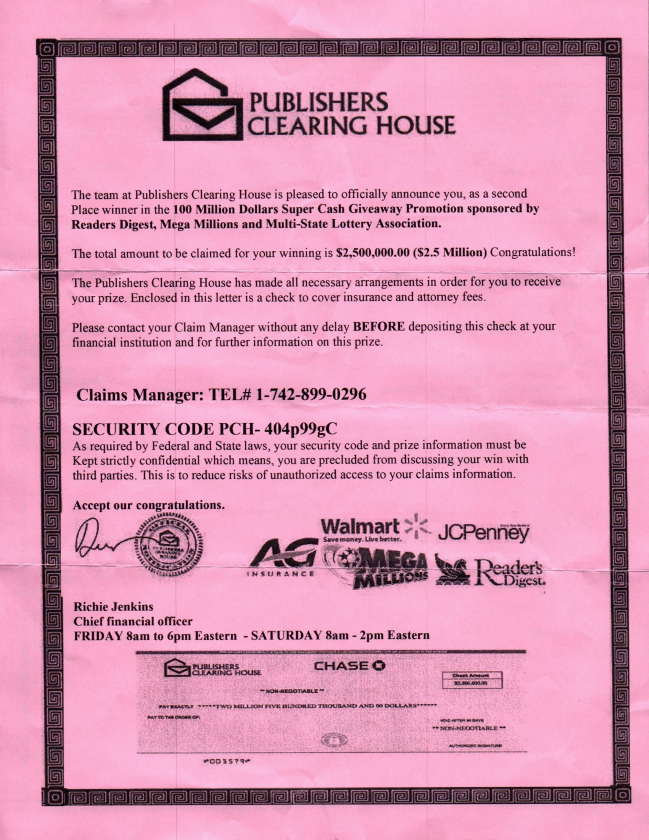
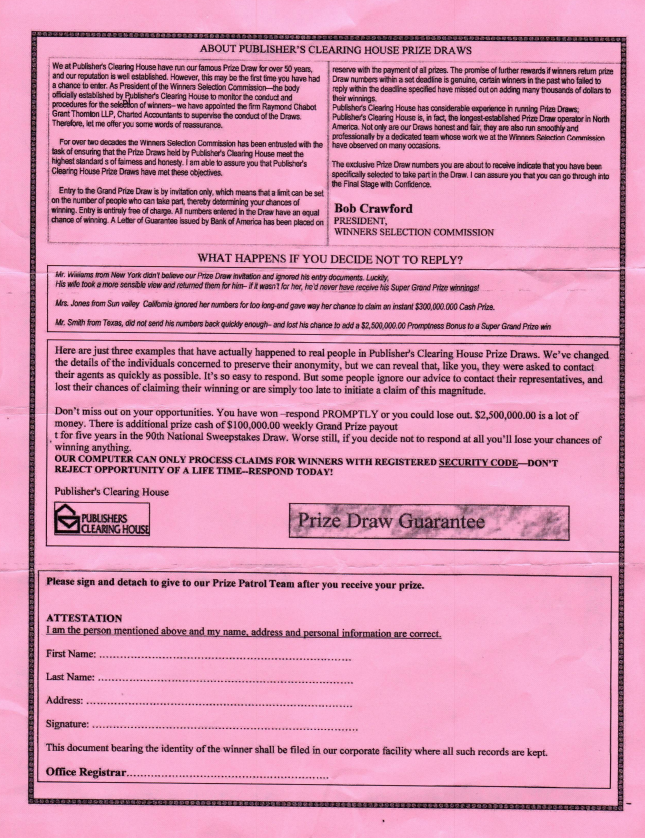
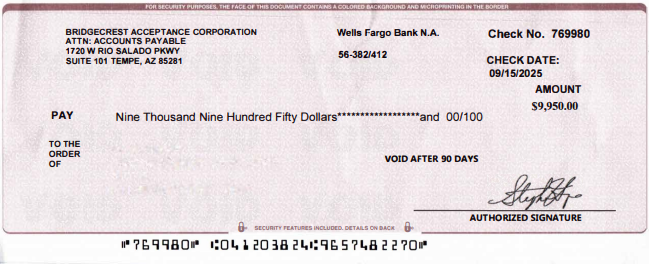
The first indicator that this letter is not actually from Publishers Clearing House is the enclosed check for “fees.” A simple search online will reveal that Publishers Clearing House, along with other sweepstakes companies, will never require their winners to pay any fees, taxes, or insurance on their prizes. The recipient is urged to contact the Claims Manager “without any delay” before depositing the check, another key indicator that this is a scam. There is also a warning that due to “Federal and State laws,” the recipient is not allowed to discuss their win with third parties.
As a whole, these pieces work together to place the recipient in a vulnerable position without any confirmation that their win is legitimate. In the event that the recipient followed the instructions provided in this letter, they would call the “Claims Manager” who would instruct them to deposit the included check to cover their “fees.” However, due to the urgency of the matter, they would be asked to wire a portion of the check from their own bank account (usually a few thousand dollars) while they wait for the check to clear in order to secure their prize. Eventually, the provided check will bounce, and the individual will be unable to track or recover the money wired to the fraudsters.
How to Protect Yourself
Several tactics used in this scam are common among financial fraud and identity theft. Be on the lookout for these key indicators:
- Sense of Urgency: This letter utilizes language that conveys a heightened sense of urgency, and the large prize at stake only amplifies this. By urging the recipient to act “without any delay”, to “respond PROMPTLY”, and to “RESPOND TODAY!”, they are preventing the recipient from slowing down and thinking critically about the validity of the letter.
- Isolation: A less common (but dangerous nonetheless) tactic used by scammers is to isolate the victim from others who may clue them in on the scam. By informing the winner that “Federal and State laws” prohibit them from discussing their winnings with third parties, they are less likely to reach out to their financial institution, legal representation, or other legitimate and informed sources that could help them avoid falling for the scam.
- Suspicious Payments: In this instance, the payment to the scammers would likely be in the form of a wire transfer, which is incredibly difficult to track and irreversible once completed. Similar scams may ask for payment in the form of prepaid gift cards, which are also untraceable. Both of these payment methods should raise red flags when requested by an unknown source.
It is important to remember that Publishers Clearing House will never ask for money in order to claim a prize, and you must enter to win. If you did not enter any sweepstakes recently, then any message claiming a win is invalid. If you did enter, carefully review any letters, emails, phone calls, or other communication for the scam tactics highlighted in this article. It is also best practice to avoid sending wire transfers, gift cards, or personal information to anyone you don’t know.
When in doubt, call our Contact Center at (518) 393-1326 Option 2 or visit a branch for assistance. Staying informed is your best defense!